

Cancer, a multifaceted disease driven by uncontrolled cellular proliferation and influenced by genetic, environmental, and lifestyle factors, affects millions globally each year.
This introduction explores the foundational principles of tumor biology, highlighting the “Hallmarks of Cancer” as outlined by Hanahan and Weinberg, and cancer epidemiology, emphasizing preventable risk factors that account for 70-80% of cases, as detailed in Dr. Andrei Popescu’s 2025 educational module from Titu Maiorescu University.
Understanding these elements is crucial for advancing prevention, early detection, and targeted therapies in oncology.
The healthcare industry is continually evolving with new technologies and treatments. From telemedicine advancements to breakthroughs in personalized medicine, these developments are reshaping patient care.
Foundations of Tumor Biology and Epidemiology: Insights from Contemporary Oncology Education
Table of Contents
- Introduction
- Defining Oncology and the Nature of Tumors
- Epidemiological Frameworks in Cancer Research
- Risk Factors: Environmental, Behavioral, and Intrinsic Contributors
- Genetic Underpinnings: Oncogenes, Tumor Suppressors, and Hereditary Predispositions
- Conclusion: Implications for Research and Practice
- Glossary of Abbreviations
Introduction
Defining Oncology and the Nature of Tumors
Malignant tumors exhibit a constellation of acquired capabilities that distinguish them from normal cellular behavior. Hanahan and Weinberg’s “The Hallmarks of Cancer: The Next Generation” (2011) identifies eight core attributes:
- Sustained proliferative signaling
- Evading growth suppressors
- Resisting cell death
- Enabling replicative immortality
- Inducing angiogenesis
- Activating invasion and metastasis
- Reprogramming energy metabolism
- Evading immune destruction
These hallmarks underscore cancer’s evolutionary adaptability, transforming a single aberrant cell into a systemic threat.
Epidemiological Frameworks in Cancer Research
Descriptive epidemiology quantifies disease burden through standardized metrics such as incidence, prevalence, and mortality. For example, in Romania (population: 19,031,330 in 2022), breast cancer exhibited an incidence of approximately 66.6 per 100,000 (12,685 new cases), a five-year prevalence of 259.8 per 100,000 (49,460 cases), and a mortality rate of 20.4 per 100,000 (3,877 deaths), according to the Global Cancer Observatory.
Analytic epidemiology elucidates causal associations via observational designs such as case-control and cohort studies. Key measures include relative risk (RR) and odds ratio (OR). Experimental epidemiology evaluates interventions under controlled conditions, such as randomized trials. Collectively, these approaches reveal that 70–80% of cancers are potentially preventable through risk factor modification, as noted by the National Cancer Institute (NCI).
Risk Factors: Environmental, Behavioral, and Intrinsic Contributors
Tobacco smoking remains the leading behavioral carcinogen, accounting for 80% of lung cancers and influencing multiple other malignancies. Ionizing radiation, including ultraviolet and gamma rays, also contributes significantly. Alcohol consumption increases risk across several cancer types, per the European Prospective Investigation into Cancer and Nutrition (EPIC) study. Age, infections (e.g., HPV, EBV, H. pylori, hepatitis viruses), obesity, and environmental pollutants further compound risk.
The World Health Organization (WHO) estimates that up to 3.5% of global cancer deaths are attributable to alcohol alone, underscoring the interplay between behavioral and biological determinants.
Genetic Underpinnings: Oncogenes, Tumor Suppressors, and Hereditary Predispositions
Germline mutations, exemplified by BRCA1/2-associated hereditary breast and ovarian cancer (HBOC), confer markedly elevated lifetime risks. Preventive measures such as MRI screening, prophylactic surgery, and targeted poly(ADP-ribose) polymerase (PARP) inhibitor therapy are integral to management.
Conclusion: Implications for Research and Practice
Glossary of Abbreviations
- ASTRO: American Society for Radiation Oncology
- BRAF: B-Raf proto-oncogene, serine/threonine kinase
- BRCA1/2: Breast cancer gene 1 and 2
- CDC: Centers for Disease Control and Prevention
- EBV: Epstein-Barr virus
- EPIC: European Prospective Investigation into Cancer and Nutrition
- FAP: Familial adenomatous polyposis
- HBOC: Hereditary breast-ovarian cancer
- HPV: Human papillomavirus
- IARC: International Agency for Research on Cancer
- MRI: Magnetic resonance imaging
- NCI: National Cancer Institute
- OR: Odds ratio
- PARP: Poly(ADP-ribose) polymerase
- PIK3CA: Phosphatidylinositol-4,5-bisphosphate 3-kinase catalytic subunit alpha
- RR: Relative risk
- TP53: Tumor protein p53
- UV: Ultraviolet radiation
- WHO: World Health Organization
“
Approx. 70-80% of cancers are considered preventable by reducing exposure to risk factors
“
Dr. Andrei Popescu
Focus on Preventive Health
Given that approximately 70-80% of cancers are preventable through the reduction of modifiable risk factors such as smoking, excessive alcohol consumption, and poor nutrition, prioritizing preventative health strategies— including routine screenings, vaccinations, and lifestyle modifications—offers the most effective means of mitigating disease incidence and promoting long-term population health.
- GI Oncology (Includes Pancreas/ Upper GI/ retroperitoneum and Colorectal Oncology).
- Stereotactic Radiosurgery (SRS) / Stereotactic Radiation therapy (SRT).
- High Dose Rate Brachytherapy (HDR Brachytherapy) – Intracavitary (Started).
- Colorectal Surgery (Colon, Rectum, Anal canal, Motility disorders, Pelvic Floor Disorders).
- Urology is a super-speciality branch to treat diseases of kidneys, ureter, bladder, prostate, penis, testes.
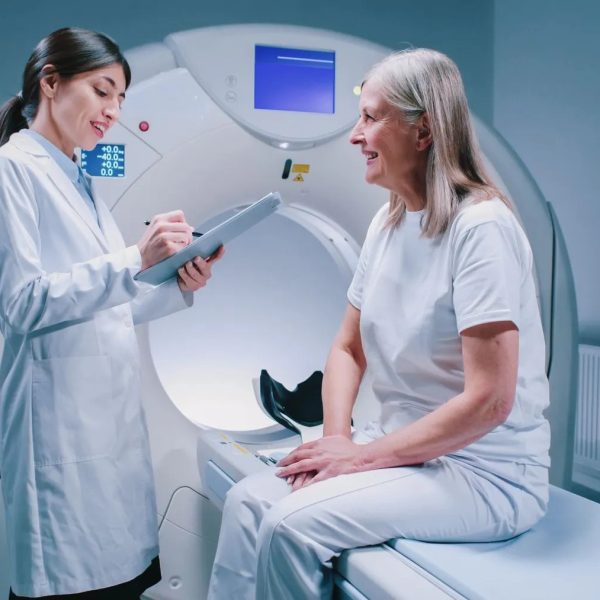

Patient Counseling
Patient counseling is defined as providing medication information orally or in written form to the patients or their representatives on directions of use, advice on side effects, precautions, storage, diet and life style modifications.